
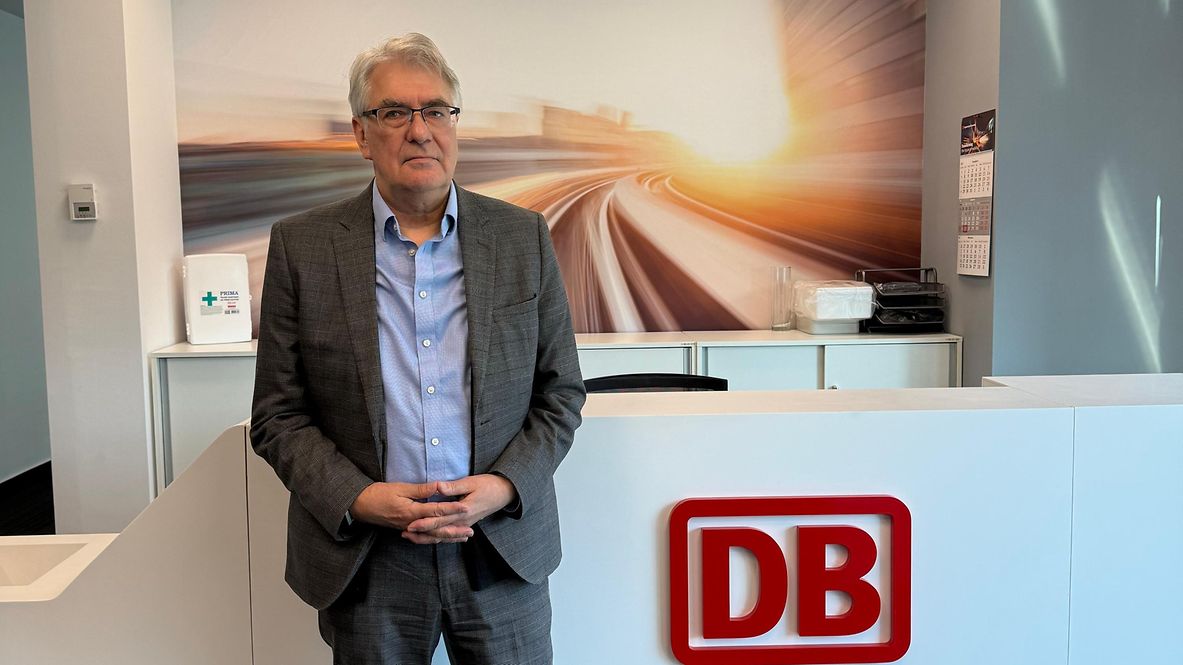
Article: Interview with our Head of Design Center India
You’ve already had the chance to connect with our colleagues in Romania. What were your first impressions of this collaboration?
“My first impression was very positive — everyone I met was open, engaged, and highly motivated. I’m really looking forward to strengthening this collaboration further. We’ve already started discussing next steps, identifying gaps, and exploring concrete opportunities for exchange between our teams. What I find particularly encouraging is the shared willingness to work more closely together and to actively shape improvements across our Design Centers. I believe there is great potential to strengthen our collaboration and drive meaningful changes together.”
Let’s take a step back and look at your journey. How did you originally find your way into the railway sector?
“Interestingly, the railway sector was not something I initially planned during my studies — it developed later through my professional experience. I started my career as a volunteer in Nepal, which gave me the opportunity to travel and gain exposure to different environments. After returning, I began working in an engineering company, but I soon realized that my strengths were more aligned with consultancy. So, I moved into consulting, where I had the chance to work across different departments and gain a broad understanding of the field. That’s ultimately how I found my way into the railway sector. I started with a metro project, and from there became involved in high-speed rail projects in Germany and different international projects, where I was closely involved in the decision-making process.”
You’ve spent decades working on complex infrastructure projects across very different regions — from Germany to China, the Middle East, and Africa. What has kept you engaged over such a long international career?
“For me, it has always been about not limiting myself to where I come from. My family has a history of displacement — my parents and grandparents were refugees, and I was raised in a region with a different cultural and religious background, and my early years were not always easy. That experience shaped my mindset quite strongly. Growing up in a rural environment, with my grandparents working as farmers, I felt early on that I wanted to explore more and see beyond those boundaries. Education became the key, and at some point, I realized that I wasn’t limited by my place of origin. That’s what motivated me to go abroad and take on new challenges.
One very formative experience was spending several years in Nepal — it really opened my eyes to different ways of living and working. From there, international work became something I truly valued. Of course, there are always phases in life. I also made a conscious decision to stay in Germany for some time to focus on my family while my children were growing up. But now, I’m at a point where I can once again fully embrace international opportunities — and that’s something that continues to motivate me.”
You started your career as a civil engineer and later moved into roles such as Contract Manager and Senior Project Manager. How did that transition shape the way you lead today?
“I didn’t actively push myself into higher positions early in my career. Looking back, I would say I wasn’t always as open to change as I could have been — I probably could have stepped out of my comfort zone earlier and more often. At the same time, my development happened step by step, and that gave me the chance to build a strong foundation. Each role added experience and confidence, so when I eventually moved into more senior positions, I felt well prepared and capable of meeting the expectations. Today, I’m in a position where I feel confident and comfortable with what I do.”
You’ve worked in very diverse environments — from Europe to Asia and the Middle East, and also in development projects in Africa and Afghanistan. How have these international experiences influenced your leadership style?
“Working in such diverse environments has had a strong impact on how I lead today. You encounter very different personalities, communication styles, and ways of working — and that teaches you not to take things at face value. For example, a ‘yes’ does not always necessarily mean full agreement or commitment, depending on the cultural context. I also learned that it’s not enough to simply assign tasks and step back. In many situations, people need guidance, support, and a certain level of involvement to succeed. Leadership, in that sense, means staying engaged and helping others move forward.
These experiences gave me a much deeper understanding of individual differences. Today, especially in international teams, I feel that I can better understand the challenges people face — their perspectives, potential barriers, and ways of thinking. Overall, it has made me more open. I approach people a bit differently, without hesitation, and try to create an environment where communication is easier and more supportive.”
Looking back over your career, is there a leadership belief or piece of advice that you once underestimated — but today consider essential or one that you still follow these days?
“Over the years, I’ve received advice that I should make it more visible that I’m ‘the boss’— especially because my communication style can sometimes be perceived as less directive. But that approach never really felt right to me, and I chose not to follow it. I believe leadership is not about constantly emphasizing authority, but about creating space for others to contribute, take ownership, and grow. I prefer to give people the freedom to work, to be creative, and to develop their own solutions. At the same time, leadership also means taking responsibility when needed. If things are not going in the right direction, I step in, make decisions, and help bring things back on track. For me, it’s about finding the right balance — empowering people while still being accountable for the overall outcome.”
In today’s fast-changing and sometimes uncertain environment, how do you create stability and clarity for your teams?
“For me, it starts with honesty and transparency. If there are uncertainties or doubts, I don’t try to hide them — I address them openly, especially within the leadership team. I believe it’s important that we have a shared understanding of the situation, because only then can we effectively work toward a solution. At the same time, it’s about managing communication carefully - ensuring that the right level of information is shared with the right people. With the leadership team, I focus on open discussions, analyzing the situation together, and aligning closely with higher management. This approach helps create clarity, even in uncertain situations, and allows us to move forward in a structured and coordinated way.”
From your perspective, what opportunities do you see in the collaboration between Design Center India and Design Center Romania?
“I see a lot of potential in how we can complement each other. Each Design Center has its own strengths, and by working closely together, we can support one another where needed — creating a more flexible and effective way of delivering projects. An important aspect is the exchange of experience and continuous communication. By learning from each other and sharing knowledge, we can grow stronger as a global network. Looking ahead, I see a real opportunity for us to act more as one integrated region — where we can take on projects together as a complete package and operate with a higher level of autonomy. That would be a very strong position for us in the long term.”
Let’s switch to a more personal note - what does a perfect Sunday look like for you?
“A perfect Sunday would be a sunny day spent with my grandchildren and my wife at home. We enjoy going for walks together or taking a swim — it’s a simple way to relax and be fully present with family.”
Is there a quote or life motto that has guided you in your journey?
“One motto that has stayed with me from the beginning of my career is: ‘Learn and help abroad.’ When you go to a new country, you often know nothing about the people, the culture, or the way they work. You have to adapt, observe, and learn. The beauty in that is that, with your past experience you can contribute meaningfully and grow together with others.”
What’s something you wish you had started earlier in life?
“I wish I had begun exploring my passion for singing earlier. When I was in school, I struggled with hitting the right notes and doubted my abilities. A few years ago, I joined a choir and discovered I am a tenor, which I truly enjoy. It took me a long time to realize my potential, and while I’m grateful I eventually returned to this hobby, I do think it would have been rewarding to start this journey sooner.”
And finally - a fun one to close: if you could only listen to one music album for the rest of your life, what would it be?
“I would say Miles Davis – Sketches of Spain.”
Interview by Orza Andrea
 Go
Go